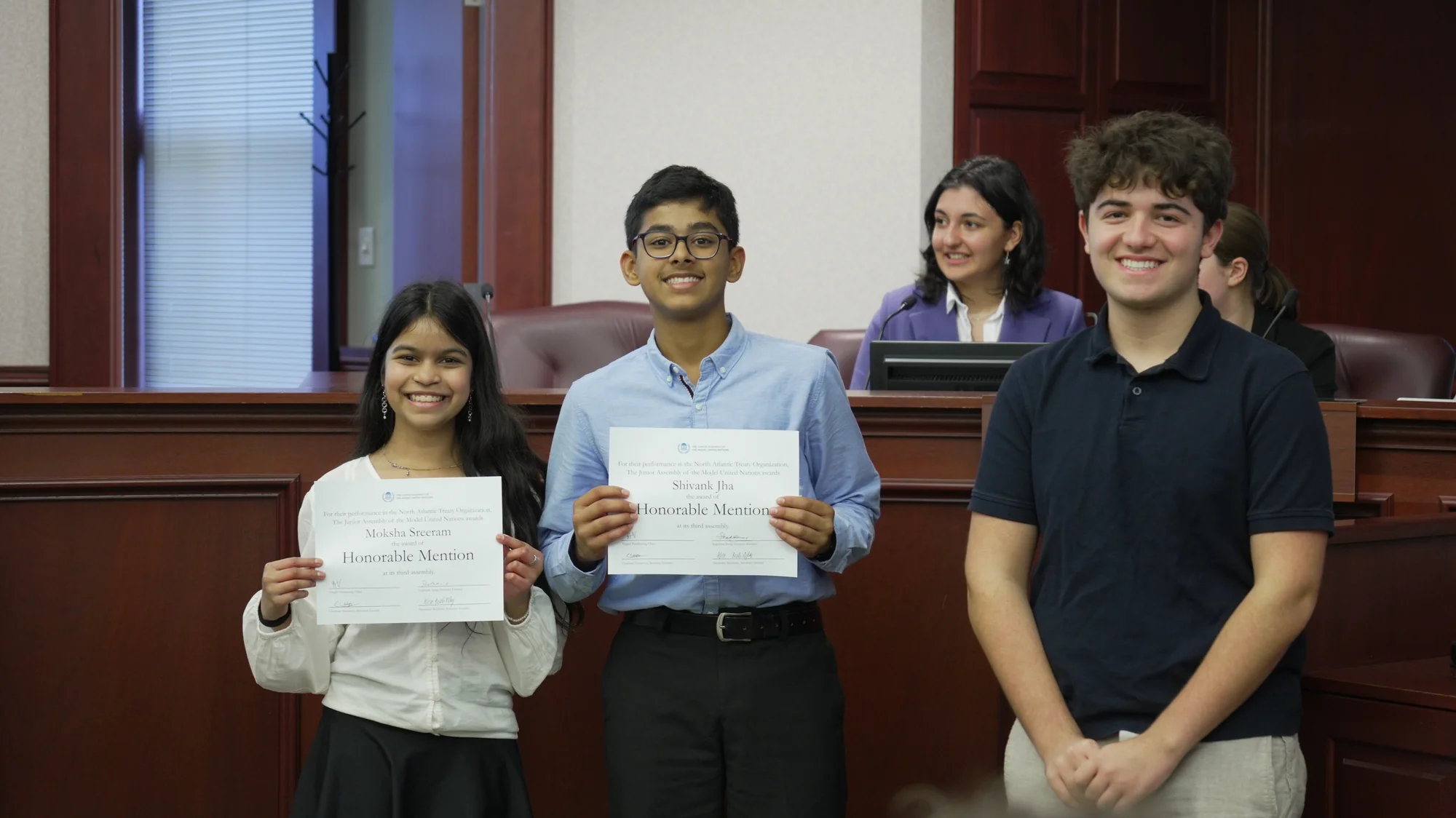
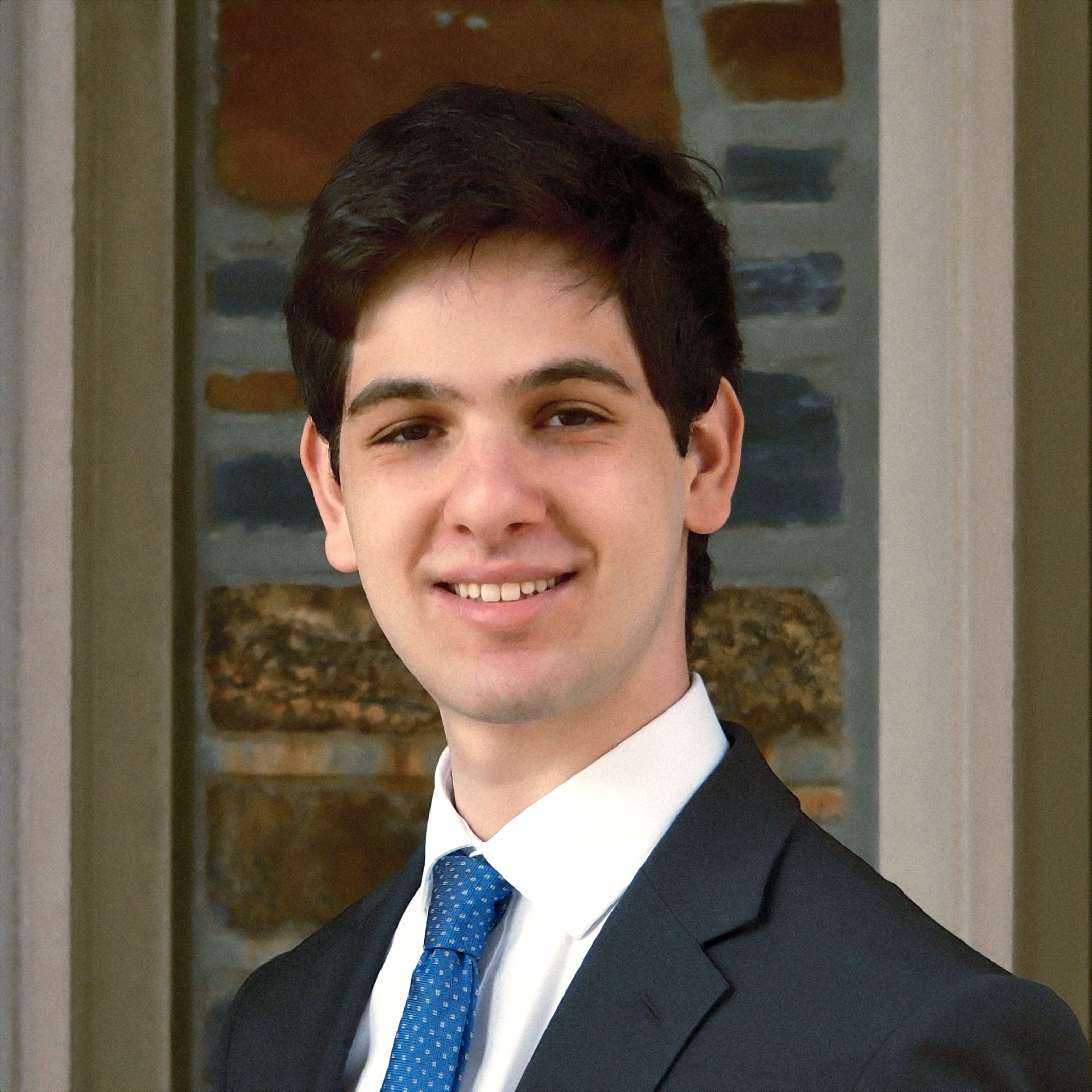
Hi, I’m Joshua.
Mathematics and computer science student at Duke. I founded JAMUN because the middle schooler I once was deserved a shot at academic competition — and so does every kid like him.

Why I built JAMUN.
When I was eleven, a Model UN conference cracked open a part of my brain I didn’t know existed. Suddenly research felt like a contact sport, public speaking felt like a tool, and a room full of strangers felt like a team I’d been waiting to join.
But I noticed quickly: the conferences I attended cost hundreds of dollars, the prep materials lived behind subscriptions, and most kids in my city were never going to see the inside of those rooms. JAMUN started as a refusal to accept that — and grew, conference by conference, into the program I wished had existed when I was eleven.
Smart isn’t a club. It’s a habit. Every middle schooler deserves a room where that habit gets celebrated.
A few numbers.
The shape of the last few years, in figures I’m proud of and a little stunned by.
How I got here.
Four moments that turned a middle schooler with a question into a nonprofit with three programs.
The first conference.
I walked into my first Model UN as a sixth grader. I was terrified, then I was hooked. The room rewarded curiosity and effort in a way few middle-school spaces did, and I never quite left it.
A pattern I couldn't ignore.
By high school, I was helping run conferences and noticing the same gap every time: hundreds of dollars in registration fees, prep materials locked behind paywalls, and the schools that needed these programs the most never on the roster.
JAMUN, version one.
I founded JAMUN with a handful of friends and a stubborn question — what would academic competition look like if it were designed for everyone? Our first conference ran on borrowed chairs and a lot of caffeine.
Three programs. Thousands of students.
Today JAMUN runs Model UN, Mock Trial, and Mathletes for grades 5–8, with free resources, low-cost conferences, and grants covering up to 100% of costs. We're a long way from those borrowed chairs.
Building the version that should have existed.
“I built JAMUN for the kid I was at eleven — curious, restless, and locked out of the rooms where academic competition happened. The programs I run now are the programs I needed then.”
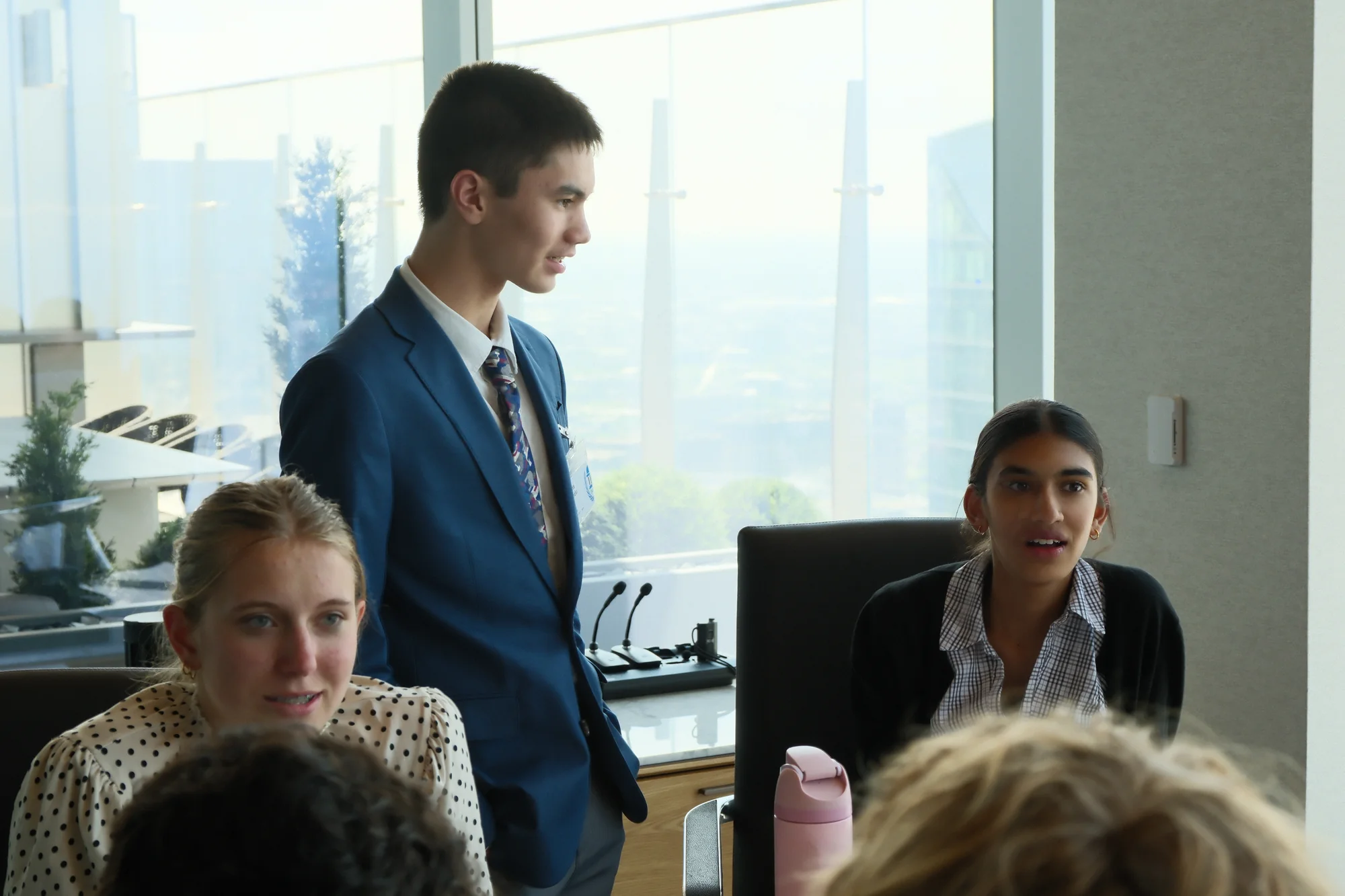
What I spend my time on.
The work behind the conferences. Four areas where I put most of my hours, in roughly the order I think about them.
Access
Removing the price tag from academic competition — through grants, free curriculum, and conferences priced for any family.
Building teams
Recruiting and mentoring the 80+ student volunteers who make JAMUN run — the program is only as good as the people behind it.
Curriculum
Designing the prep materials, training guides, and committee topics that turn a curious middle schooler into a confident competitor.
Math & systems
Studying mathematics and computer science at Duke, where I think a lot about the systems that make a small nonprofit scale.
Beyond JAMUN.
When I’m not running JAMUN, I’m at Duke studying mathematics and computer science — two fields that, oddly, turn out to be excellent training for running a youth-led nonprofit. Both reward the patience to keep asking why something works until you actually understand it.
I read too much, write a little, and am probably most useful in a room where someone is trying to scope a problem that feels too big to start.
Want to talk?
Whether you’re a student curious about a program, a parent with a question, an educator looking to bring JAMUN to your school, or a volunteer hoping to help — drop me a line. I read every message.
Or reach the wider team at [email protected].